Wisdom teeth are the last teeth to come through, usually in the late teens or early twenties. Many people keep theirs without any trouble, but for others they cause pain, infection or damage and need to be removed. Dr. Anton Beetge has a keen interest in oral surgery, including surgical extraction of wisdom teeth. While some can be removed in the chair, very often they require general anaesthesia in hospital.
When do wisdom teeth need to come out?
Removal is usually recommended when a wisdom tooth:
- is impacted (stuck beneath the gum or against the next tooth) or only partly through the gum, where food and bacteria can collect and cause repeated infection and swelling
- is decaying, or causing gum disease that is hard to treat because of its position at the back of the mouth
- is damaging the tooth in front of it
- is associated with a cyst or other problem seen on an X-ray
Wisdom teeth that are healthy, fully through the gum and easy to keep clean can often stay. Problems can develop without any pain, so an examination and X-ray is the only way to know for sure. You can also read about our general tooth extractions.
Why have wisdom teeth removed under general anaesthesia?
Some wisdom teeth can be removed with local anaesthetic, occasionally with sedation, and we will always tell you if that is enough for you. General anaesthesia means you are fully asleep and unaware during the surgery. It may be recommended if:
- you are very anxious about dental treatment, or have had a bad experience before
- you have a strong gag reflex
- several wisdom teeth need to be removed at once
- the teeth are deeply impacted and the surgery is more involved
Whether it is right for you depends on your health, your teeth and your preferences. We will discuss the options at your consultation, and you decide with the full picture.
Where the surgery takes place
Surgery under general anaesthesia is done at Newmarket Day Hospital, a private day hospital in the MediMix building which is connected to the Netcare Alberton Hospital. General anaesthesia is given by an anaesthetist, and the hospital team looks after you before and after the procedure. You will normally go home the same day.
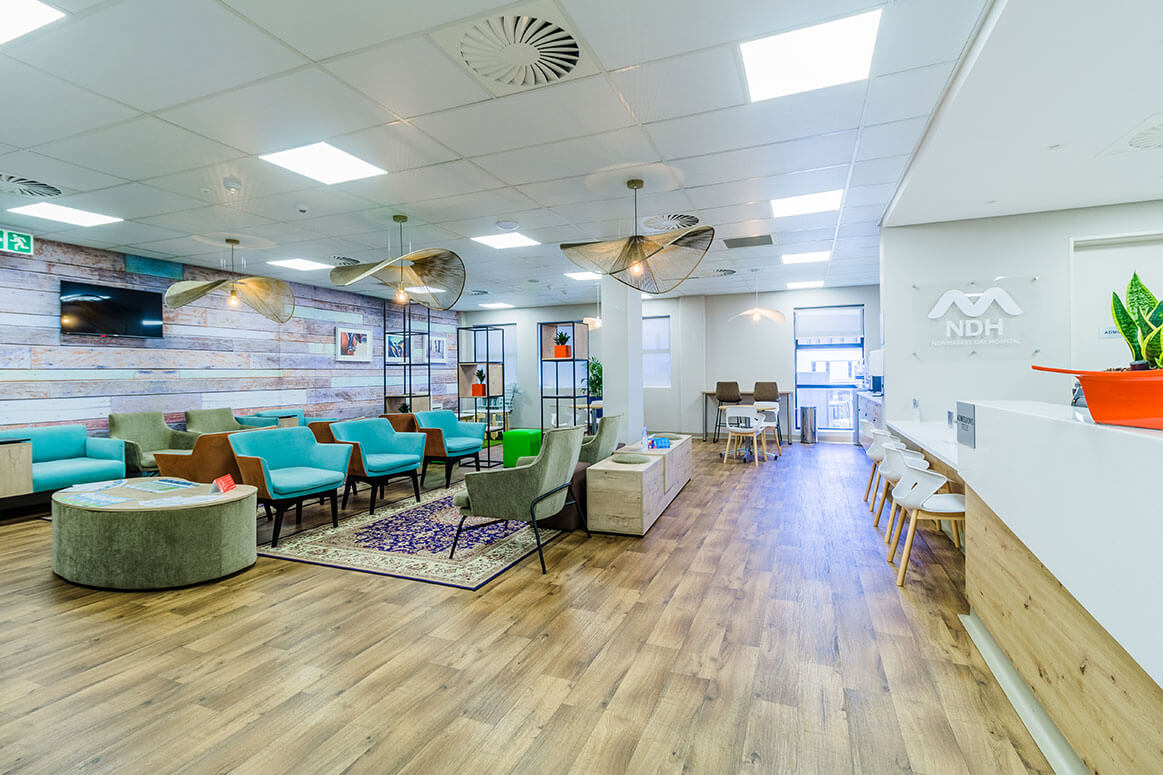
The reception and waiting area at Newmarket Day Hospital.
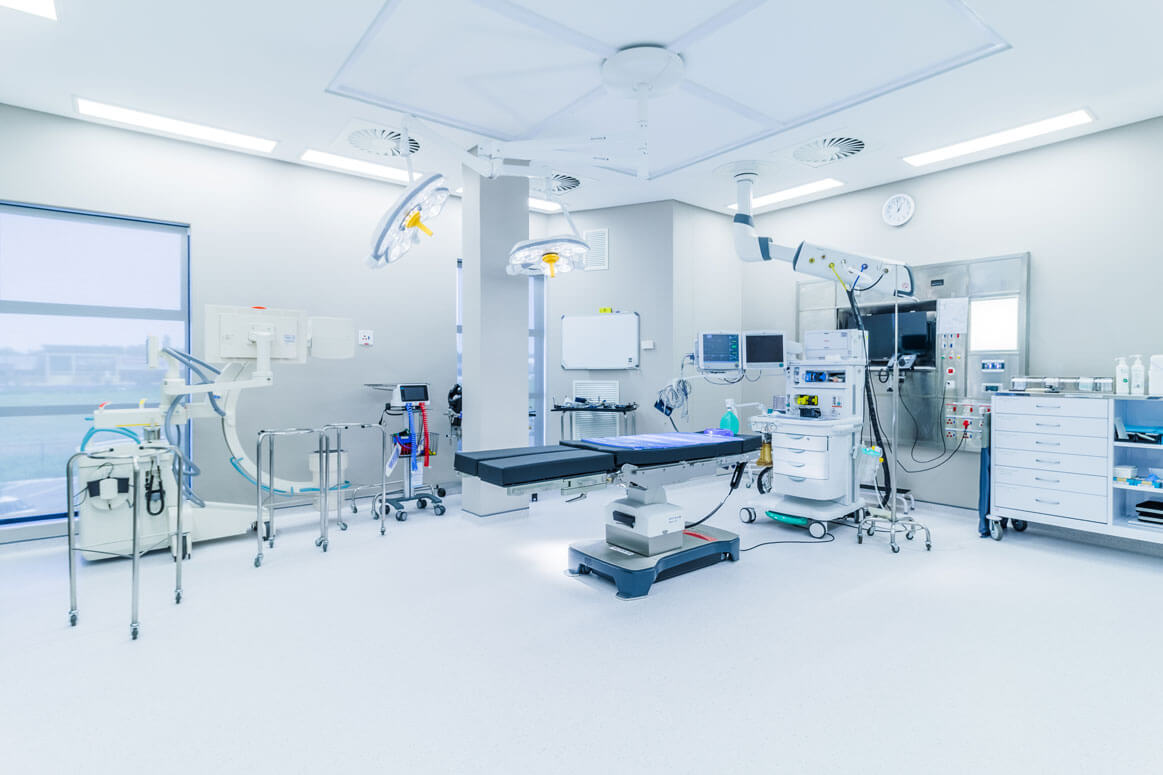
One of the operating theatres at Newmarket Day Hospital.
What to expect
- Consultation. We examine your mouth, take X-rays to see the position of the teeth and nearby nerves, and discuss your options, the risks and the costs.
- Preparing for the day. You will be given clear instructions about eating and drinking beforehand, which medicines to take or avoid, and what to wear. The hospital may ask you to complete a pre-admission form. Please arrange for another adult to drive you home and stay with you.
- The surgery. You are put to sleep by the anaesthetist, the teeth are removed, and the gums are stitched if needed. The time it takes depends on how many teeth are being removed and how they are positioned.
- Waking up and going home. You recover under the care of the nursing team and go home the same day, with written aftercare instructions and medication.
Recovery and aftercare
- Some swelling, bruising and stiffness opening your mouth is normal. Swelling is usually worst on the second or third day and then settles.
- Use cold packs on the cheek for the first day, and take the pain medication we prescribe.
- Eat soft, cool foods at first and avoid hot drinks, spicy food and using a straw.
- Do not smoke, as it slows healing and raises the risk of a painful dry socket.
- Keep the area clean as instructed. We will tell you when to start gentle salt-water rinses.
- After a general anaesthetic, do not drive, drink alcohol or sign important documents for at least 24 hours.
Phone us if your pain gets worse after the first few days, if bleeding does not stop, or if you have a fever. If you develop spreading facial swelling, or have difficulty swallowing or breathing, go to the nearest emergency unit immediately.
Possible risks
Wisdom tooth removal is a common and well-established procedure, but like any surgery it has risks. They include swelling and bruising, infection, dry socket (a painful empty socket where the clot has been lost), and temporary numbness of the lip, chin or tongue when a lower tooth lies close to a nerve. Permanent nerve changes are uncommon. Upper wisdom teeth can sit close to the sinus. General anaesthesia carries its own small risks, which the anaesthetist will explain to you. We will go through all of this with you before you decide.
Costs and medical aid
If your surgery is done in hospital, the costs usually include separate accounts for the dentist, the anaesthetist and the hospital. Many medical aid schemes contribute towards wisdom tooth surgery in hospital, but this depends on your plan and often needs pre-authorisation. We will give you an estimate after your consultation and can tell you what information your scheme will need.
Frequently asked questions
Will I feel anything during the surgery?
Under general anaesthesia you are asleep and will not feel or remember the procedure. Afterwards the area will be sore, and we will make sure you have pain relief.
Do all four wisdom teeth need to come out at the same time?
It usually makes sense to remove all four while you are asleep. This minimizes pain and recovery in the long term. We will advise you after examining your X-rays.
How long will I be off work?
Many people take a few days to recover, although it varies with how many teeth were removed and how complicated the surgery was. We will give you an idea at your consultation.
Do I have to have a general anaesthetic?
Not always. It is one option, as is conscious sedation, and we will tell you honestly if local anaesthetic is enough for your case.
Book a consultation
If you are worried about your wisdom teeth, or would like to find out whether surgery under general anaesthesia is right for you, request an appointment or call us on 064 837 5587. Our practice is at 99 Nelson Mandela Avenue, Randhart, Alberton.